

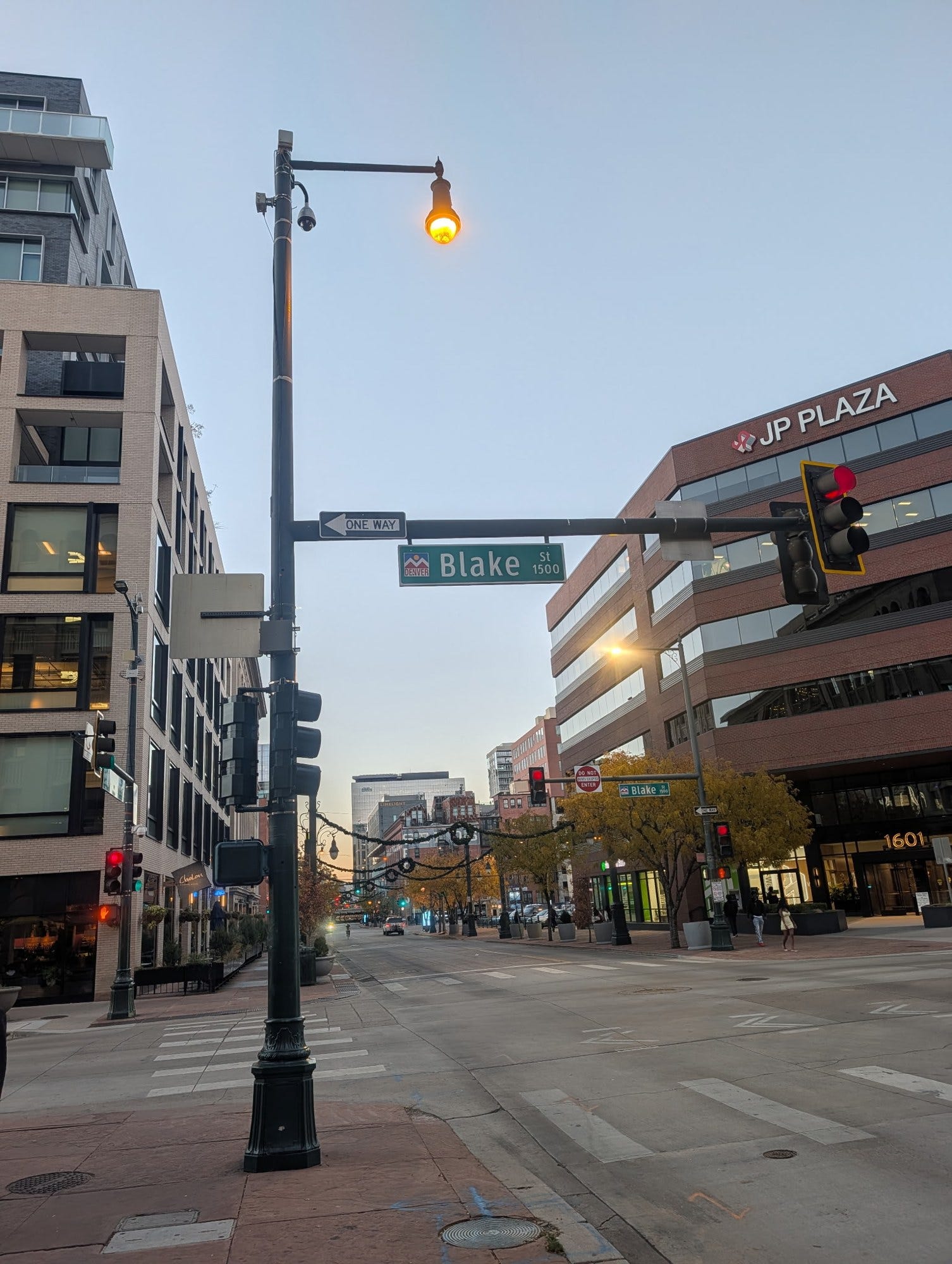
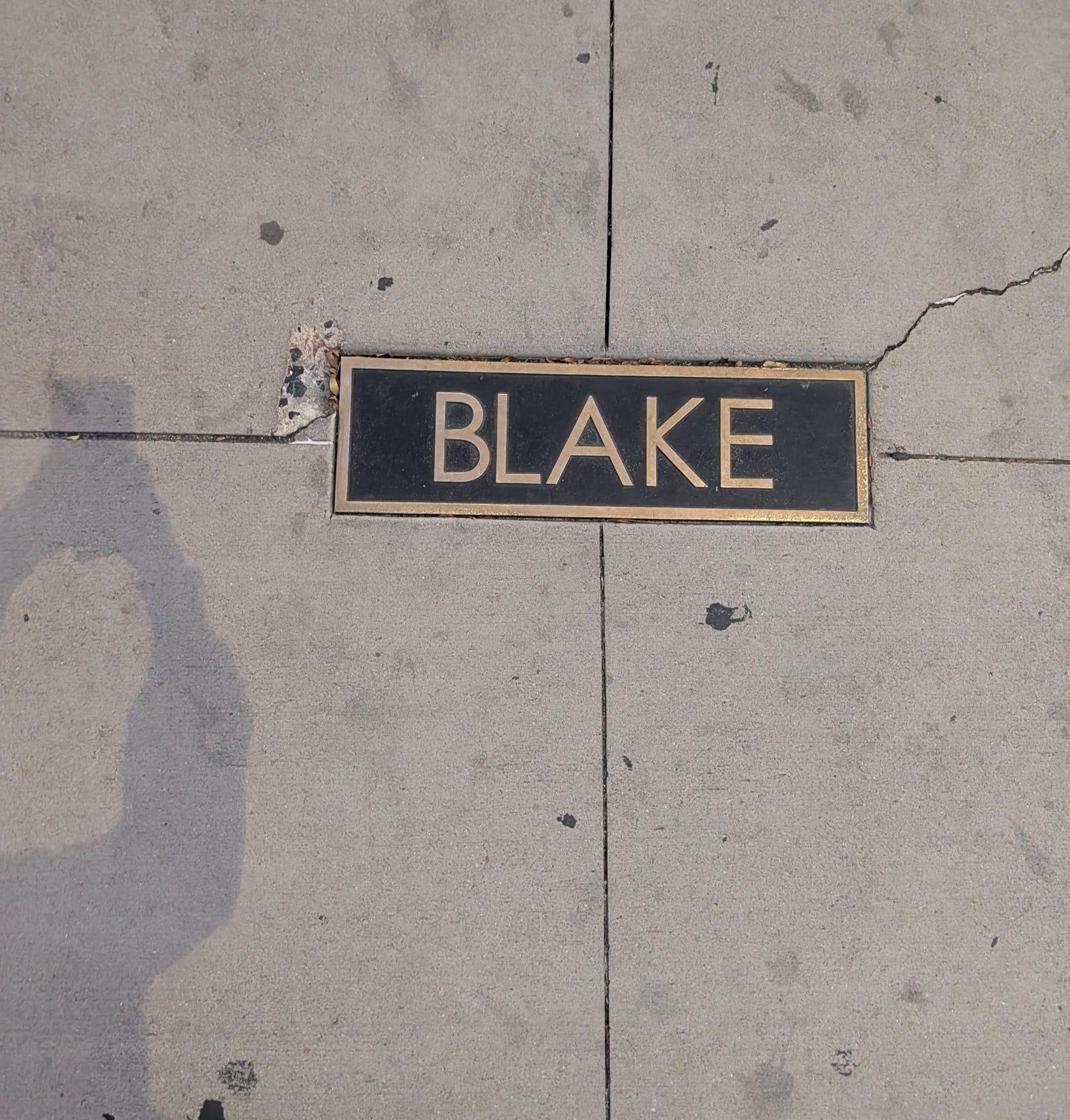
I was in Denver this past weekend, and of course I had to stop for a picture under the Blake Street sign. A little off topic for this newsletter, I know. But the more I read about the street with my name on it, the more it read like a real estate case study.
Built on supply
Blake Street is named for Charles Blake, who came to Denver in 1858 and set up supply depots throughout what’s now Lower Downtown, according to the Denver Landmark Commission’s historical marker (HMdb). He was a merchant betting on a mining camp. That’s the oldest real estate play there is: get to the corridor first.
When the railroads arrived, Lower Downtown became Denver’s warehouse district. Manufacturers and wholesalers moved in to serve Union Station and the rail yards, and a wave of warehouses in the 1920s gave Blake Street the brick buildings it still has today.
Then it fell apart
After World War II, two things killed the district: trucks and the interstate highway system, and new single-story warehouses built outside downtown. Union Station went from a peak of 88 trains a day to one or two. The hotels became flophouses, and Lower Downtown became known as Skid Row. In the 1960s and 1970s, roughly 20% of its buildings were torn down (Denver Public Library).
Every real estate cycle has a moment where the old use dies before the new one shows up. Blake Street sat in that gap for decades.
The comeback
The turnaround came from three moves:
Zoning. In 1988, Denver made Lower Downtown a historic district, capping heights, encouraging mixed use and protecting the old warehouses.
Early believers. Small investors started converting warehouses into lofts, restaurants and breweries, including the Wynkoop Brewery, started by a future Denver mayor and Colorado governor, John Hickenlooper.
An anchor. Coors Field opened in 1995 at 2001 Blake Street. A stadium on the edge of a recovering district turned it into a destination. Union Station’s redevelopment, finished in 2014, finished the job.
Today those same blocks hold some of the most valuable real estate in Denver.
What Blake Street teaches Boise
Infrastructure decides winners. The railroad built Blake Street, and the interstate emptied it. In the Treasure Valley, the SH-16 extension is about to do the same kind of sorting.
Old buildings are an asset, not a problem. The warehouses that survived became the most valuable buildings in the district. Garden City’s older industrial pockets are a lot closer to that story than most people think.
Anchors change everything around them. Coors Field didn’t just fill its own seats. It repriced every block nearby. It’s the same reason I keep writing about Apple, Walmart and The Capital Grille.
The best buys happen in the gap. The people who bought Lower Downtown in the 1980s bought it when it looked broken. The opportunity is almost always in the place everyone else has written off.
I may be a little biased about the name. But if you own an older building in a corridor that’s about to change, I’d love to talk about what it could become. Reach out at blake@kzbrealestate.com.