

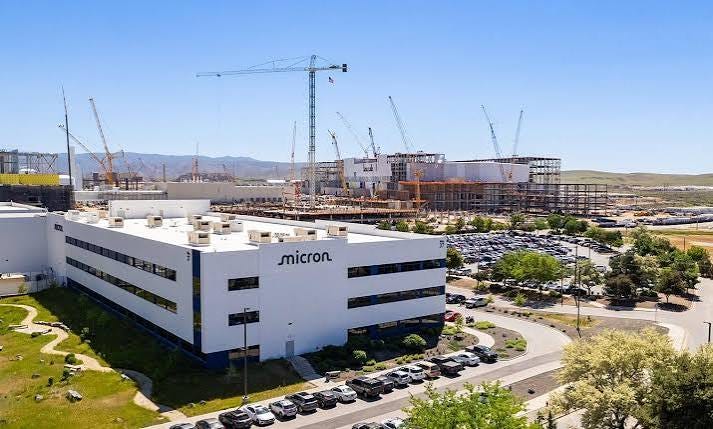
If you own, lease, or are thinking about buying commercial real estate in the Treasure Valley, there is one story that sits underneath almost every other story in our market. It’s Micron.
I grew up here. I’ve watched Micron be “the big employer on Federal Way” my whole life. What’s happening now is a different thing entirely. Micron is putting roughly $50 billion into two new fabs in Boise, the largest private investment in Idaho’s history. And the company paying for it just posted a year most of corporate America will never see: fiscal 2026 revenue of $133 billion, up from $37 billion the year before.
First, what does Micron actually make?
Most people didn't know what Micron did until AI took off. The AI models behind tools like ChatGPT need massive amounts of memory to run, and memory chips are Micron's business. Here's the simple version.
Think of a computer like a student doing homework:
The processor is the brain. It does the thinking. Companies like Nvidia, Intel, and AMD make these. Micron does not.
DRAM is the desk. It’s where the brain spreads out whatever it’s working on right now. A bigger desk means more work at once. When the power turns off, the desk gets wiped clean. Micron is one of only three big DRAM makers in the world.
NAND is the backpack. It’s long-term storage, where your photos, apps, and files live even when the device is off. Micron makes this too.
HBM is a desk stacked like a skyscraper and pushed right up against the brain. High-bandwidth memory stacks layers of DRAM and sits next to an AI chip, so it can feed data incredibly fast. AI can’t run without it, and there isn’t enough of it in the world. That’s why Micron’s revenue tripled.
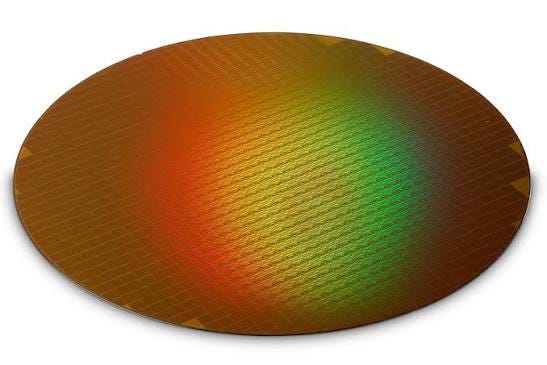
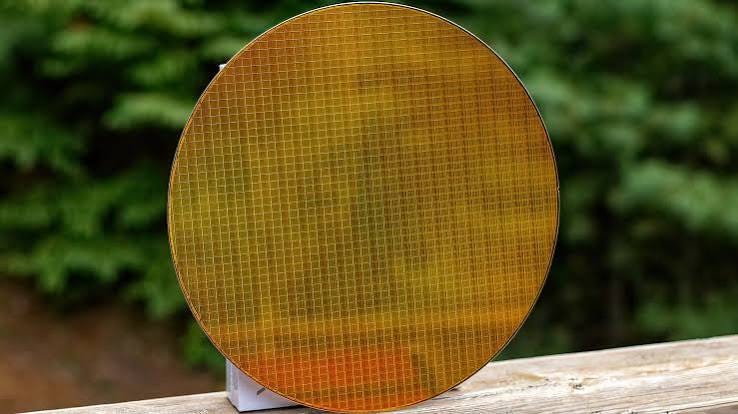
A “fab” is the factory where these chips get made. It’s a building full of ultra-clean rooms where machines print microscopic circuits onto thin silicon discs called wafers. Each wafer gets cut into hundreds of chips.
One more thing most people don’t realize: Micron is the only U.S.-based company that makes memory chips. Nearly all the rest is made in South Korea, Taiwan, and Japan. When Washington talks about bringing chip-making home, Boise is a big part of that answer.
Where the expansion stands today
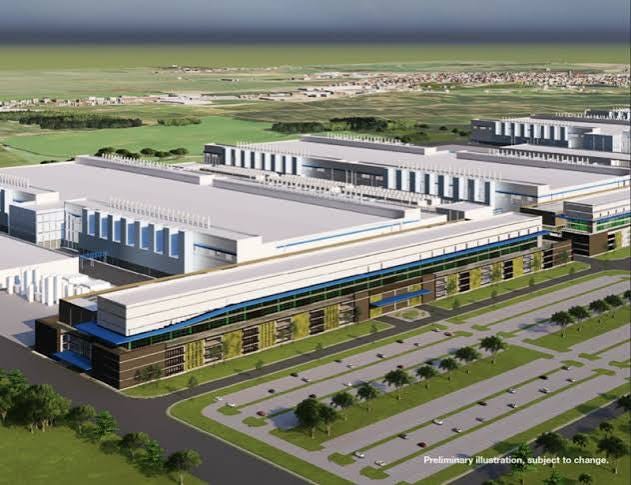
The first fab is on schedule for first wafers in mid-2027, and the second follows in late 2028. Here’s the scorecard as of this month (full details on Micron's Idaho expansion page):
Fab 1 (ID1): cleanroom “blowdown” milestone hit spring 2026; first DRAM wafers mid-2027
Fab 2 (ID2): announced June 2025; will produce high-bandwidth memory (HBM) for AI; first wafers late 2028
Federal support: Up to $6.2B in CHIPS Act grants for the Idaho and New York fabs, paid out against milestones
Direct Micron jobs: About 3,500 to 4,000 new roles, on top of ~7,000 Micron employees already here
Total regional jobs: 17,000+ including construction and the supplier ecosystem
Community commitments: $75M, 10-year Idaho Community Investment Framework; 60,000 SF training center; a childcare center
For scale: 70,000 tons of structural steel went into the first fab alone. And Micron isn’t stretching to pay for this. It spent $27.4 billion on capex in fiscal 2026 and ended the year with $73.5 billion in cash and investments.
What it means for commercial real estate, by asset class
The impact won’t hit every property type the same way or at the same time. Here’s how I’d rank it:
Small-bay industrial and flex (now through 2030). Supplier, contractor, and service tenants want to be close to the fab. The strongest direct beneficiary, especially southeast Boise, I-84, and Canyon County.
Multifamily and workforce housing (now and long-term). Construction crews now, permanent high-wage hires from 2027. Demand is real; watch new supply and affordability.
Neighborhood retail and service (2027 onward). Restaurants, fitness, medical, and childcare near southeast Boise and commuter routes. A good backfill story for older centers in the right trade areas.
Office (gradual). Engineering, professional services, and government contractors. Already tightening: 6.6% vacancy and a record $23/SF average ask (TOK Commercial, mid-2026).
Land (long-term). Southeast Boise toward Birds of Prey, Kuna, and the Highway 16 corridor. Where the biggest upside and the biggest speculation will both live.
The office numbers surprised me. Downtown Boise just posted its first positive net absorption since late 2023, and new-to-market companies are paying about 23% more per square foot than local start-ups. That’s the early signal of outside firms setting up shop.
A simple model: what southeast Boise will need
Run the 17,000 jobs through a few rules of thumb (about 1.4 workers and 2.5 people per household, with two-thirds new to the valley) and you get roughly 20,000 new residents, about the size of Kuna. That population supports 300,000 to 600,000 SF of new retail and service space, 80,000 to 120,000 SF of medical office, and 8,000 to 12,000 housing units. Add 50 to 100 supplier firms and you're looking at up to 1.5 million SF of industrial and flex. It's back-of-envelope math, not a forecast, but it shows the scale.
My take: underwrite the operations, not the hype
I spent about a decade managing a commercial portfolio here, and the lesson that stuck is that value comes from tenants who pay rent for a long time. Not from headlines. So here’s how I’m thinking about Micron as an owner:
Proximity matters, but function matters more. A tired building near Federal Way with the right loading, power, and parking will outperform a shiny one that doesn’t fit how suppliers actually operate. I’ve seen this firsthand backfilling a big-box space on Federal Way with national and local tenants. The demand was there because the location and the use fit.
The supplier wave is the opportunity most people will miss. Everyone talks about Micron jobs. Fewer people are asking where the gas supplier, the HVAC contractor, and the cleanroom maintenance company will lease 5,000 to 15,000 SF. That’s where I’d be looking.
Don’t pay 2030 prices in 2026. Land in southeast Boise is already being priced on the story. If your deal only pencils because “Micron is coming,” it doesn’t pencil.
The risks I’m watching
The memory cycle. Memory is famously cyclical, and in past downturns Micron has slowed spending and delayed timelines.
Milestone-based subsidies. The $6.2 billion in CHIPS grants pays out as Micron hits construction and production milestones. Policy can shift.
Labor and infrastructure. Skilled trades are stretched, and roads and utilities in southeast Boise are under pressure.
Too much of a good thing. If developers chase the story all at once, we could see pockets of oversupply before the payroll wave arrives.
Net: I’m bullish, with discipline. This is the most significant long-term demand driver our market has had in my career, and it rewards investors who are patient and specific about what they buy.
Closing
Micron’s expansion isn’t a one-week story. It’s a five-year story that will touch nearly every property type in the Treasure Valley. I’ll be tracking it here: the milestones, the supplier moves, and the deals that follow.
If you own property near southeast Boise, or you’re trying to figure out where the next wave of tenant demand is headed, I’m always happy to talk through it. Reply to this email or reach me at blake@kzbrealestate.com.
Blake Haggett, CCIM · Founder & Managing Broker, KZB Commercial Real Estate
Sources
KBOI: Micron posts record year as Boise fab nears production (Oct 2, 2026)
Manufacturing Dive: Micron’s $200B U.S. investment (June 2025)
24/7 Wall St.: Micron’s $50B Idaho buildout (Aug 20, 2026)
REBusinessOnline: Boise office market gains ground ahead of Micron’s expansion (TOK Commercial) (Sep 11, 2026)
Ahlquist: How the Micron expansion is reshaping Treasure Valley CRE (June 2026)